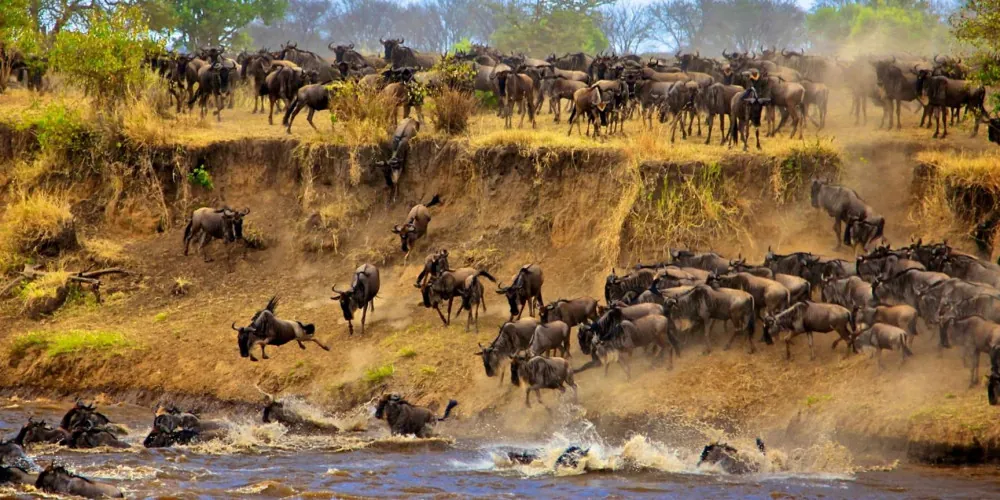
Wildebeest herds charging down a dusty riverbank into the water during a river crossing

An atlas of northern Tanzania & the coast

Destinations & Landscapes

Seven landscapes, each with its own light, wildlife patterns and sense of scale. We do not try to fit all of them into a single hurried circuit. Instead, we help you choose the few that suit your season and interests, then give each place enough time to become more than a photograph or a line on the map.

Seven landscapes, in depth

Know the place
before you go.

These profiles explain what each place feels like, what you might see, when it is most rewarding and how many nights are useful. Wildlife moves with rainfall and available food, so seasonal windows are planning guides rather than fixed calendars or guarantees of specific sightings.

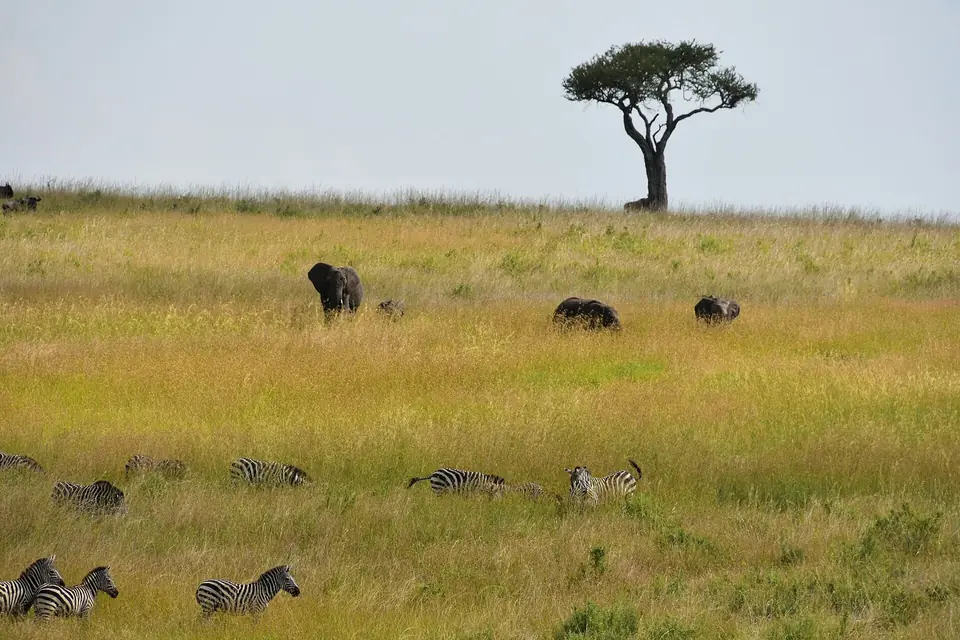
Zebra and other wildlife grazing below a lone acacia on the Serengeti plains Savannah & migration

Serengeti National Park

Serengeti

Golden plains that run to the horizon.

Identity & landscape

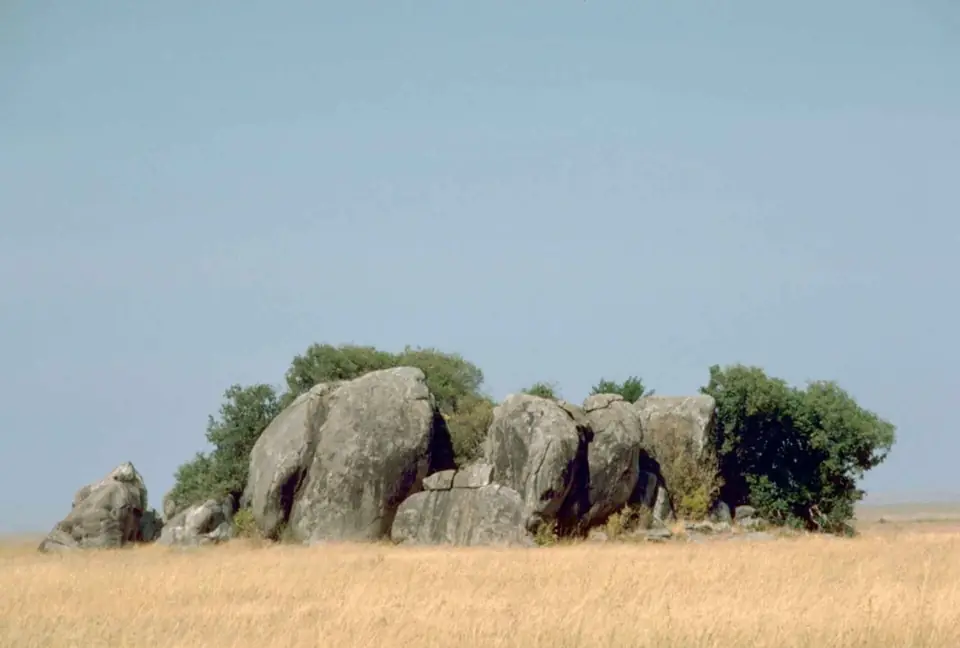
About 1.5 million hectares of open savannah, broken by granite kopjes, acacia and riverine woodland. The feeling is space: long views, big skies and a landscape that changes as the grass does.

Wildlife & highlights

The year-round movement of wildebeest and zebra following rain and fresh grazing, and the predators that follow them. TANAPA notes a high concentration of large carnivores, including lion, leopard and cheetah. In the north, Mara River crossings generally happen between July and October.

Best months
Year-roundJan–Mar in the south for calving; Jul–Oct in the north for river crossings
Stay length
3–4 nightsTwo is a realistic minimum; more time lets you follow the herds
Getting there
Fly or driveAbout 1h10–2h by light aircraft from Arusha, or a full day by road
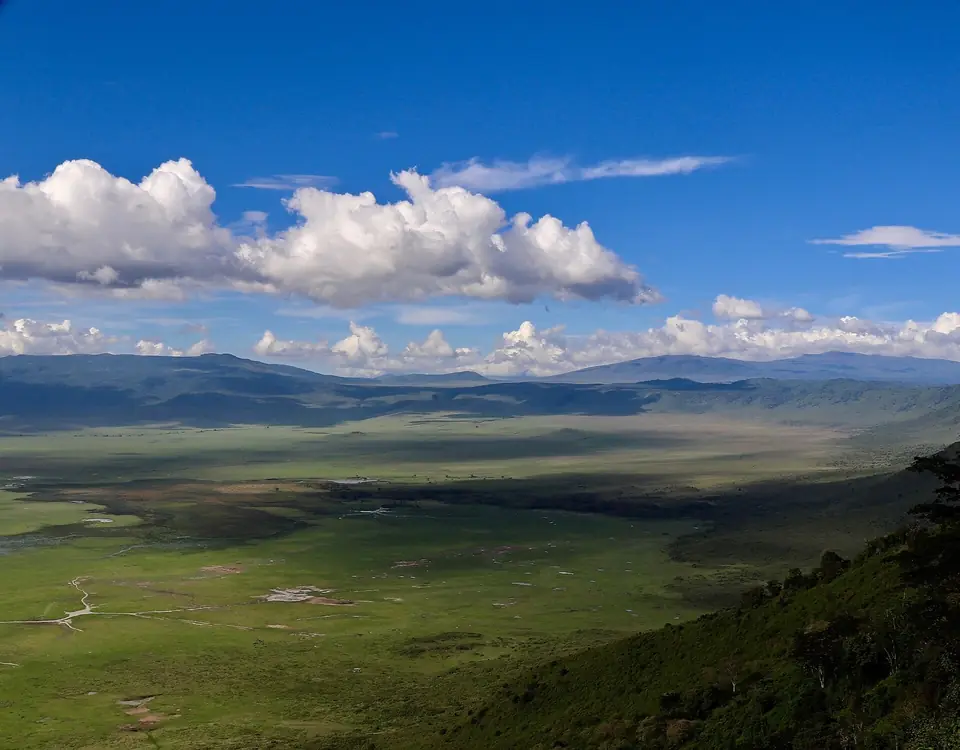
The green Ngorongoro Crater floor seen from the rim Craters & highlands

Ngorongoro Conservation Area

Ngorongoro Crater

A world held inside volcanic walls.

Identity & landscape

A vast volcanic caldera, around 20 km across and 600 m deep, set within a wider Conservation Area of misty highland forest, grassland and plains. Mornings on the rim are often cool and cloud-wrapped before the floor opens below.

Wildlife & highlights

A dense concentration of grazers and predators on the crater floor, and one of the region’s better chances of seeing black rhino, an endangered species protected here. All of the Big Five are possible, though leopard is only seen occasionally. The Conservation Area is also home to Maasai pastoralists, and highland walks can be arranged with authorised guides.

Best months
Year-roundDrier roads Jun–Oct; greener scenery and birdlife Nov–May
Stay length
1–2 nightsOne crater descent; a second night for the highlands
Getting there
By roadAbout 3½–4½ hours from Arusha, depending on stops
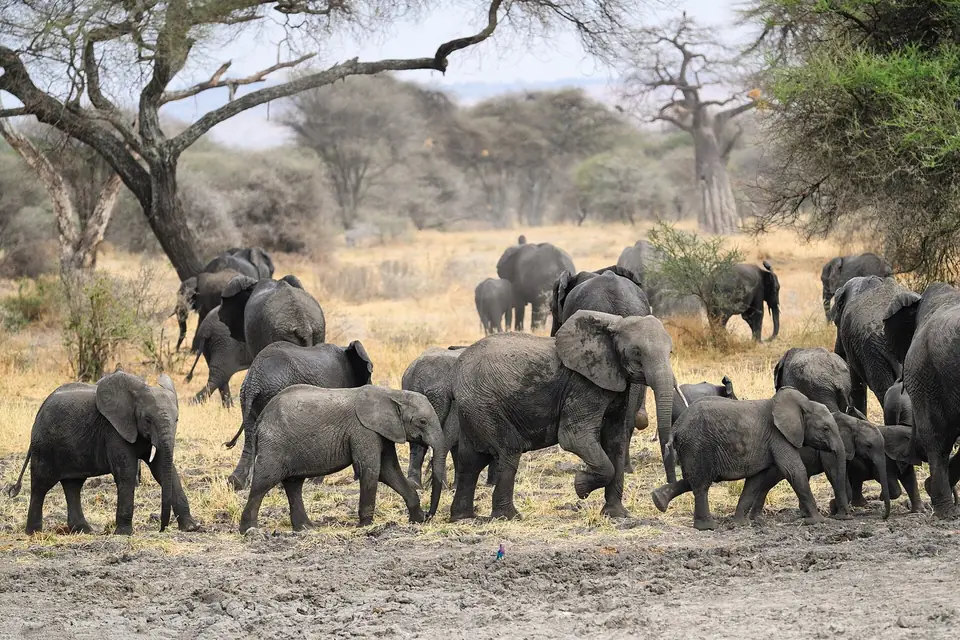
A herd of elephants among acacia and baobab trees in Tarangire Ancient baobabs & lakes

Tarangire National Park

Tarangire

Baobab country, shaped by its river.

Identity & landscape

Huge baobabs stand over a mosaic of savannah, woodland and seasonal swamps. The Tarangire River runs through it all, and it becomes the park’s lifeline as the land dries out.

Wildlife & highlights

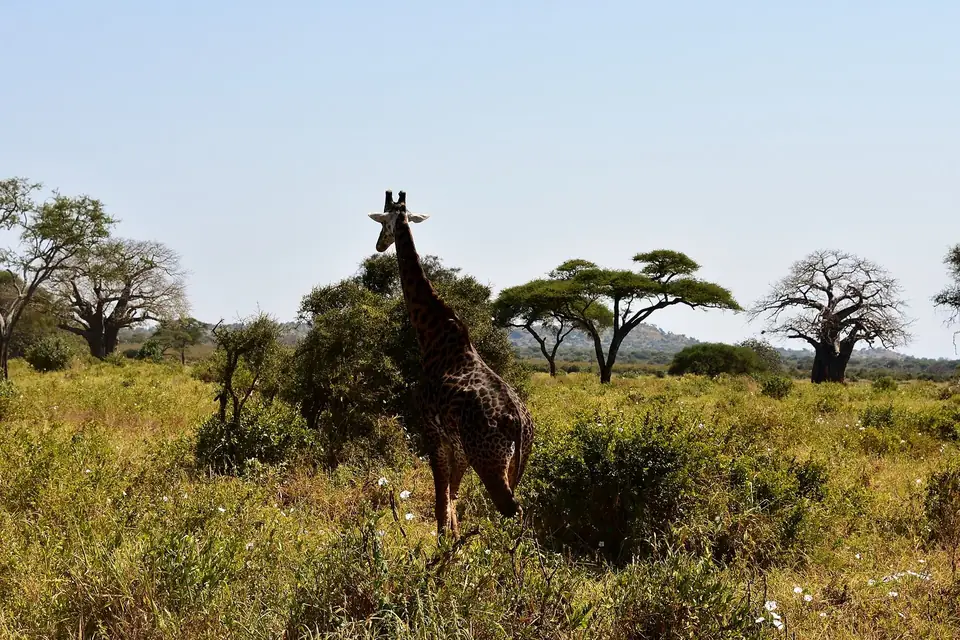
In the dry season, large herds gather along the river, including some of the north’s biggest elephant concentrations, along with giraffe, zebra and buffalo. TANAPA records more than 550 bird species, so birders find plenty to see in any month.

Best months
June – OctoberDry-season concentration along the river
Stay length
1–2 nightsTwo lets you settle in beyond the main gate area
Getting there
By roadAbout 1½–2 hours from Arusha
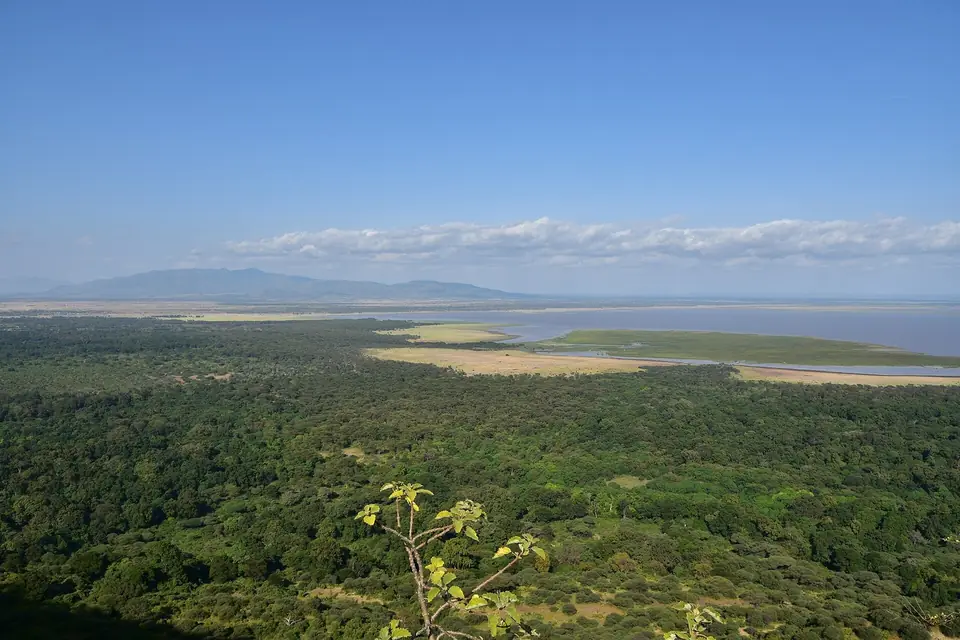
Forest stretching to Lake Manyara, seen from the Rift Valley escarpment Ancient baobabs & lakes

Lake Manyara National Park

Lake Manyara

Forest to soda lake beneath the Rift wall.

Identity & landscape

A compact park at the foot of the Rift Valley escarpment. Groundwater forest gives way to acacia woodland, floodplain and an alkaline lake. A 470-metre canopy walkway rises up to 18 metres through the trees.

Wildlife & highlights

Elephants and large baboon troops move through the forest. The park is known for lions that rest in trees. TANAPA notes lions climb elsewhere too, so treat a sighting as a lucky bonus. Flamingo gatherings on the lake are seasonal and vary in size, and there are more than 400 bird species overall.

Best months
June – OctoberEasier visibility; Nov–May is greener with more birdlife
Stay length
1 nightOften a full day or single night en route to the crater
Getting there
By roadAbout 2 hours from Arusha
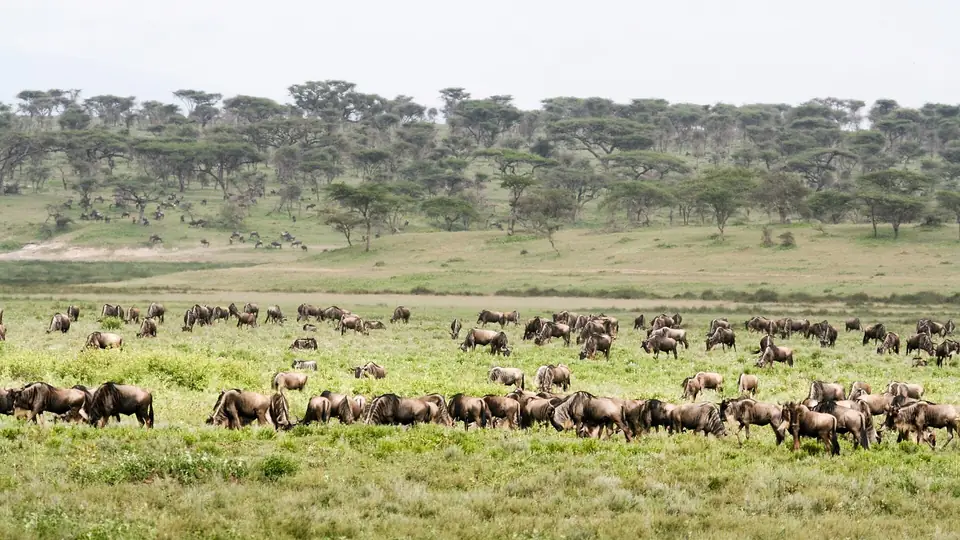
A wildebeest herd grazing on green plains near Ndutu Savannah & migration

Ngorongoro Conservation Area · southern Serengeti ecosystem

Ndutu

Where the herds come to calve.

Identity & landscape

Open short-grass plains around Lake Ndutu, with woodland and marsh at their edges. Ndutu sits inside the Ngorongoro Conservation Area and has an open boundary with the southern Serengeti. It is not the crater itself.

Wildlife & highlights

In the rains, migratory wildebeest typically gather on these nutrient-rich plains to give birth. Large numbers of young draw predators, so there is a lot to watch. Herds usually spend two to three months in the wider area, depending on rainfall.

Best months
January – MarchCalving is often concentrated around February
Stay length
2–3 nightsExtra time helps if calving or photography is the focus
Getting there
Fly or driveNdutu airstrip, or by road via the Ngorongoro highlands
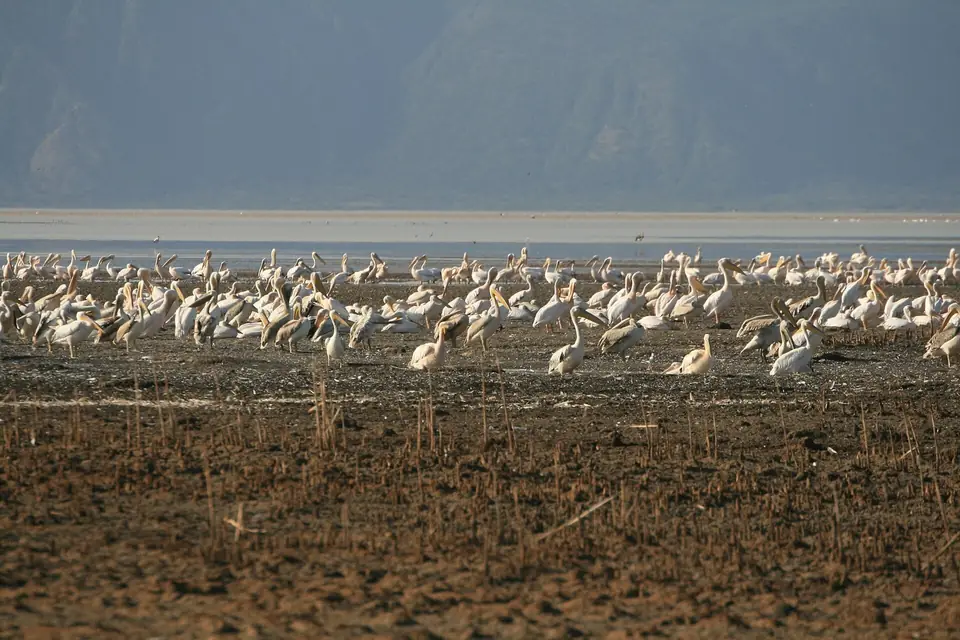
Pelicans gathered on the salty shore of Lake Eyasi Cultural & foot safaris

South-west of the Ngorongoro highlands

Lake Eyasi

A slower, on-foot chapter.

Identity & landscape

A shallow, seasonal soda lake in a Rift Valley basin, backed by the Eyasi escarpment and dotted with acacia and doum palms. After rain the shoreline spreads out. In a dry year it can shrink to a bare, pale pan.

Cultural highlights

Eyasi is about people more than wildlife. It is home to the Hadzabe, a hunter-gatherer community, and the Datoga, pastoralists known for metalwork. Visits should be locally guided and small. Ask before taking photographs, be clear about what is paid and to whom, and accept a “no” gracefully. A Hadzabe morning walk usually starts early.

Best months
June – OctoberDrier tracks; visits run year-round and the lake is fuller after rain
Stay length
1–2 nightsOne is typical; two for time around the lake
Getting there
By roadAbout 1½ hours from Karatu, with a rough final stretch
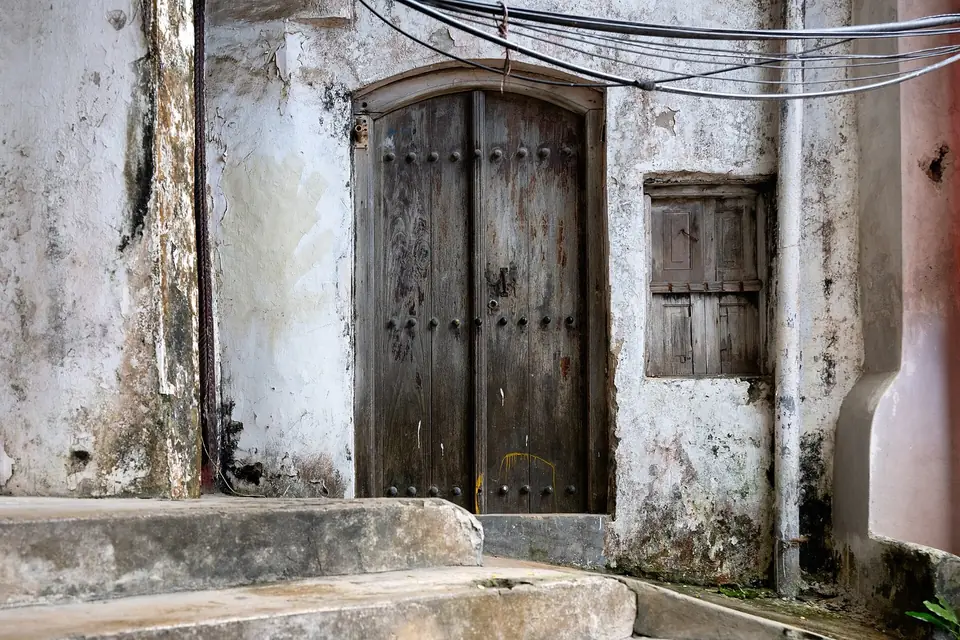
A weathered carved door on an old building in Stone Town, Zanzibar Coastal extensions

Unguja island · Indian Ocean

Zanzibar

Salt air, coral stone and slow days.

Identity & landscape

Turquoise water and white-sand beaches on one side; Stone Town’s lanes, carved doors and coral-stone houses on the other. It makes a soft landing after early mornings on safari.

Cultural highlights

Stone Town is a UNESCO World Heritage Site, inscribed in 2000. UNESCO calls it an outstanding Swahili coastal trading town, shaped by more than a thousand years of African, Arab, Indian and European influence. Along the coast, the days are about the reef, the tide and doing very little.

Best months
Jun–Oct & Jan–FebAvoid the long rains of April–May, when some places close
Stay length
3–5 nightsOften 1–2 in Stone Town, then a beach stay
Getting there
Light aircraftRoughly 1h40–2h from Arusha, JRO or a Serengeti airstrip

Northern circuit route & pacing

Distance is real.
Plan for it.

On a map, the parks look close together. On the ground, roads, park speed limits and game drives on the way all add time. A good route balances the drives against the days.

Arusha is the launchpad. Most journeys begin here or at Kilimanjaro Airport.

The classic flow runs west from Arusha: Tarangire or Lake Manyara first, then up into the Ngorongoro highlands, and on to the Serengeti. Many guests drive in so they can see the landscape change, then fly back to save a long day on the road.

Why pacing matters. Every move means packing up, checking out and travelling. Spending two or three nights in fewer places gives you more of the hours that count: early starts, unhurried sightings and quiet afternoons at camp.

Flying light. Bush flights may stop at other airstrips to drop off or collect guests. Baggage limits are typically about 15 kg in a soft-sided bag, but they vary by airline, so we confirm yours before you pack.

Typical transfer times (approximate)
RouteBy roadBy light aircraft
JRO → ArushaAbout 1h – 1h30—
Arusha → TarangireAbout 1h30 – 2h—
Arusha → Lake ManyaraAbout 2hAirstrip often used as a stop
Arusha → NgorongoroAbout 3h30 – 4h30—
Ngorongoro → central SerengetiAbout 3h or more, with game drives—
Arusha → central SerengetiAbout 8 – 10hAbout 1h10 – 2h
Serengeti → Zanzibar—About 1h50

Times are approximate and depend on roads, weather, stops and flight routing. Sources: TANAPA · plan a trip ↗ Coastal Aviation · Serengeti ↗ Coastal · luggage ↗

Tarangire→Ngorongoro→Serengeti

The complete wildlife arc

Baobabs and elephants, then the crater floor, then the open plains. Each stop adds something different, and the drive between them shows the land changing as you go.

Around 7–9 nights Shape this route
Serengeti→Zanzibar

Plains, then the sea

Fly into the Serengeti for long, uninterrupted days in the bush, then fly to the coast for a few nights of rest. The flight replaces a day on the road.

Around 7–10 nights Shape this route
Ndutu→Ngorongoro→Lake Eyasi

Green-season highlands

Calving season on the southern plains, a crater descent, then a cultural morning at Lake Eyasi. A good fit for January to March.

Around 6–8 nights Shape this route

Seasonal wildlife & weather

Match your dates
to the land.

Tanzania has two rainy seasons: short rains around November–December and long rains around March–May. Most of the year still makes for a rewarding trip. The right places just change.

Jan – Mar

Calving on the plains

The southern Serengeti and Ndutu are lush and green, and wildebeest calving often peaks around February. Large numbers of young draw predators, so there is plenty of action on the plains.

NdutuSouthern SerengetiNgorongoro

Apr – May

The long rains

Deep green landscapes, quieter parks, dramatic clouds and soft light. Some roads get tricky and some camps close, but you often have sightings to yourself.

NgorongoroLake ManyaraCentral Serengeti

Jun – Oct

The dry-season gathering

Wildlife gathers around rivers and waterholes, and thinner vegetation makes animals easier to spot. Mara River crossings usually fall in July–October in the north. This is peak season, so plan early.

Northern SerengetiTarangireZanzibar

Nov – Dec

The short rains

Short showers bring the land back to green. Migratory birds arrive (roughly November to April), and the herds start moving south toward the calving grounds.

SerengetiTarangireLake Manyara
At a glance — a planning guide, not a forecast
DestinationJan – MarApr – MayJun – OctNov – Dec
SerengetiPrime · southQuieterPrime · northGood
NgorongoroGoodGood · greenPrimeGood
TarangireGoodQuieterPrimeGood
Lake ManyaraGood · birdsQuieterPrimeGood · birds
NdutuPrime · calvingQuieterHerds elsewhereHerds arriving
Lake EyasiGoodQuieterPrimeGood
ZanzibarPrime · Jan–FebLong rainsPrimeGood
Prime: a strong matchGood: rewarding, with trade-offsQuieter: possible, but less predictable

Rainfall and herd movements change from year to year. Sources: TANAPA · seasons ↗ NCAA · Ndutu ↗ Zanzibar seasons ↗

A giraffe among baobab trees in Tarangire

Conservation & stewardship

Leave it
as wild as you found it.

These parks are fragile, and protecting them is part of what makes a trip feel unhurried. We follow park rules across TANAPA national parks and the Ngorongoro Conservation Area (NCAA) as standard, not as an extra.

  • 01

    Designated tracks only. Off-road driving is prohibited unless explicitly permitted. We keep to marked roads and park speed limits, for example 50 km/h in the Serengeti and 25 km/h in the Conservation Area.

  • 02

    Space for wildlife. We never feed or disturb animals. We keep our distance (TANAPA asks for at least 25 m at river crossings) and stay patient when sightings get busy.

  • 03

    Well-run camps and conservancies. We favour places that manage water, waste and staffing responsibly and that work with local communities.

  • 04

    Respectful cultural visits. We keep groups small, use local guides, ask before photographing anyone and are clear about payment. And we pack light: Tanzania bans plastic carrier bags.

Already have a place in mind?

Start with one place.
We’ll build around it.

Tell us the one or two places you can’t stop thinking about. We’ll suggest a route, a pace and the right season, and leave room for the parts you didn’t know to ask for.

Request a custom route